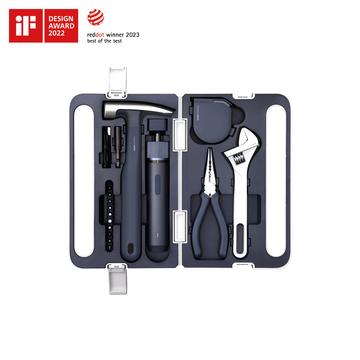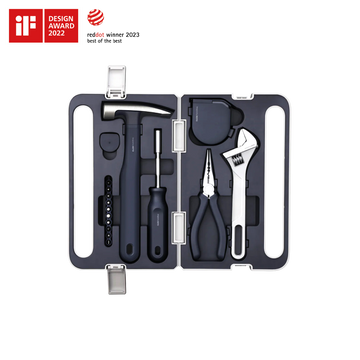






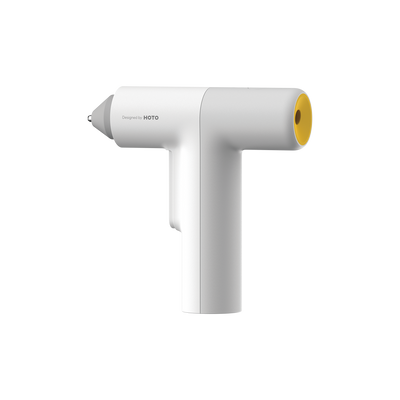


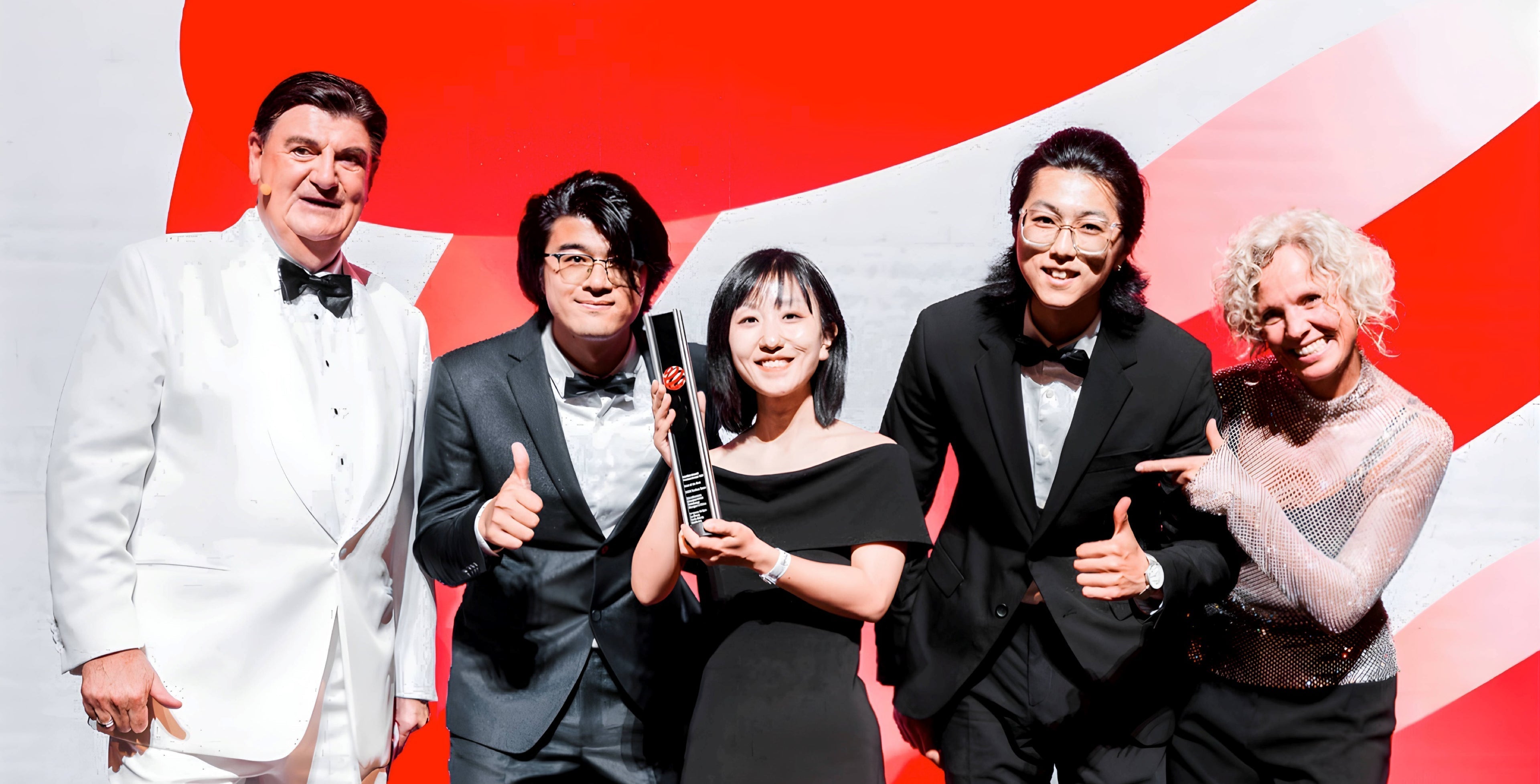

The winners of the 2023 Red Dot Design Awards have been announced, and HOTO has six products on the list. Among them, the HOTO Toolbox series has won the coveted "Best of the Best" award—a recognition reserved for the pinnacle of design excellence.
The German "Red Dot Award" is recognized as a symbol of international creativity and design, ranking among the world's four major design awards. "Best of the Best" is selected from tens of thousands of works worldwide, with only the top 100 chosen. But how did a toolbox break through traditional industry boundaries to earn this prestigious recognition?
As the lead designers behind this award-winning series, we're excited to share the two-year journey that transformed our vision of what a toolbox could be.

The Challenge: Redefining an Ancient Tool
Breaking Away from Construction Stereotypes
In an era of unlimited creativity, the tools we use in our daily lives must keep up with the times. About two years ago, we faced a fundamental question: Why do toolboxes have to look like construction equipment?
"We wanted to create a toolbox that has texture and aesthetics," we told ourselves. This simple statement represented a massive conceptual shift.
The adjustment in concept involves redefining the product entirely. The box that carries tools is no longer just a plastic container for storing clutter, but instead serves as a beautiful object that is used frequently and embellishes life.
Visual Philosophy: Elegance in Utility
In terms of the toolbox's appearance design, we eliminated the common "construction symbols" that are rough, bulky, and heavy. Instead, we opted for a simple expression, giving the toolbox a subtle and comfortable charm.
Unlike fleeting fashion trends, the clean and sculptural light-colored design with wonderful smooth curves represents more than aesthetic change. Through visual design, it conveys the suggestion that a toolbox can be elegant and part of daily life.
Simple, but better. Eliminate the unnecessary and concentrate on the essential.
Design Philosophy: Order Through Unity
Creating a Unified Design Language
"We hope that all tools have a unified design language, and the logic of their placement should be full of order and organization."
This philosophy guided every decision in the toolbox development. Each tool in the series not only upgrades its basic function but also incorporates clever collaborative operations, making each tool more intuitive, easy to understand, and easy to use.
The Hidden Butterfly Clasp Innovation
One seemingly small detail exemplifies our approach: the hidden butterfly clasp. Unlike usual plastic storage boxes that are hard to open and close, we engineered a clasp that ensures security while delivering a smooth opening experience.
The satisfying "click" gives users a pleasant start to every project. This attention to the opening experience reflects our belief that every interaction should bring joy.
Precision in Every Detail
"Details first—the design process must be careful and precise as a form of respect to consumers."
This principle guided our research, development, and quality control processes. "Constantly changing, adjusting, and pushing back again. The process took a whole year to try different materials and structures."
User-Centered Design: Expanding the Toolbox Community
Focusing on Daily Use Scenarios
"Focusing on daily use scenarios, we designed tools to meet basic family needs, encouraging repair rather than disposal—supporting the environmentally sustainable lifestyle that HOTO promotes."
The Emotional Connection
In the process of repairing or creating, both body and mind are relaxed. The tools allow people to connect more emotionally with the objects they repair and transform, fostering greater appreciation for the things they own.
Surprising User Demographics
The new appearance, simplicity, and safe use experience make the user group more diversified. We were surprised to discover that 60% of the users of the toolbox series are women—an unexpected but gratifying outcome of stepping outside traditional tool industry frameworks.
This demographic shift validates our inclusive design philosophy and proves that well-designed tools appeal to everyone, regardless of traditional user stereotypes.
Meet the Designers: A Shared Vision
Design Team Background
Zheng Lu and Zhang Zhixin are classmates from Tongji University and former students of industrial design under HOTO founder Liu Lidan. After graduation, they pursued advanced studies in Sweden and the Netherlands at Delft University of Technology. After returning to China, they joined forces at HOTO to start "making good things" together.
Design Philosophy Statement
"As product designers, we want to create more inclusive and easy-to-use products through design. We believe that everyone should be able to use tools easily and efficiently without being limited by their abilities.
In the tool industry, men have always been seen as the primary consumer group. We want to make tools that are easy to use and work for everyone, and the HOTO toolbox series is a prime example of this philosophy.
Globally, there are even more female users than male users for our toolbox series, and we want to help everyone get a better start in creating with easy-to-use tools."
Future Vision
"We believe that advances in technology will allow us to create more sustainable and efficient products that meet user needs. By experimenting with new materials and manufacturing processes, we can push past existing limitations to create more durable, versatile, and environmentally friendly tools."
Experience the award-winning design philosophy that's transforming how we think about tools. The HOTO Toolbox series represents just the beginning of a design revolution that puts people first.

Author: Parker Olivia