







It started from a very ordinary observation: most blowers are awkward to use. They’re heavy at the front, the noise is harsh, and after a few minutes your wrist starts to ache. We all had the same thought — there must be a better way to do this.
That simple frustration became our starting point. We wanted to build something that felt balanced, light, and comfortable — a tool that makes cleaning easier, not another task to wrestle with.
Rethinking Weight

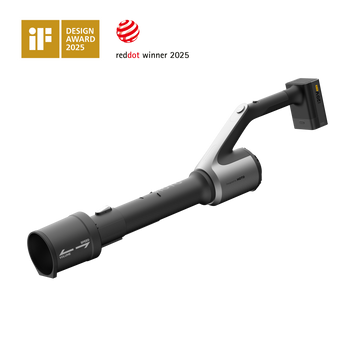
The first sketches of HOTO 20V Leaf Blower arrived quickly — rough outlines, loose ideas for the shape of the handle, the body, and the nozzle. At that stage, it was all about exploring possibilities. But it wasn’t until we held our first prototypes that the real challenge became apparent: a small shift in weight completely changed the feel of the tool. A handle that looked sleek and ergonomic on paper could feel awkward after just a few minutes of use.
The first prototypes taught us that weight distribution wasn’t just a technical detail — it was the defining factor in the user’s experience. When the weight is off, the tool feels heavy and unwieldy, no matter how lightweight it may seem at first. But when the balance is right, the blower becomes almost weightless in the hand. You lift it, and it feels as though it’s floating there, almost forgotten, ready to work without creating any strain.
This is the moment when we knew we had found the balance — a tool that not only felt light but also effortless to maneuver. It wasn’t just about cutting weight; it was about redistributing it, finding a harmony between form and function.
Designing the Air
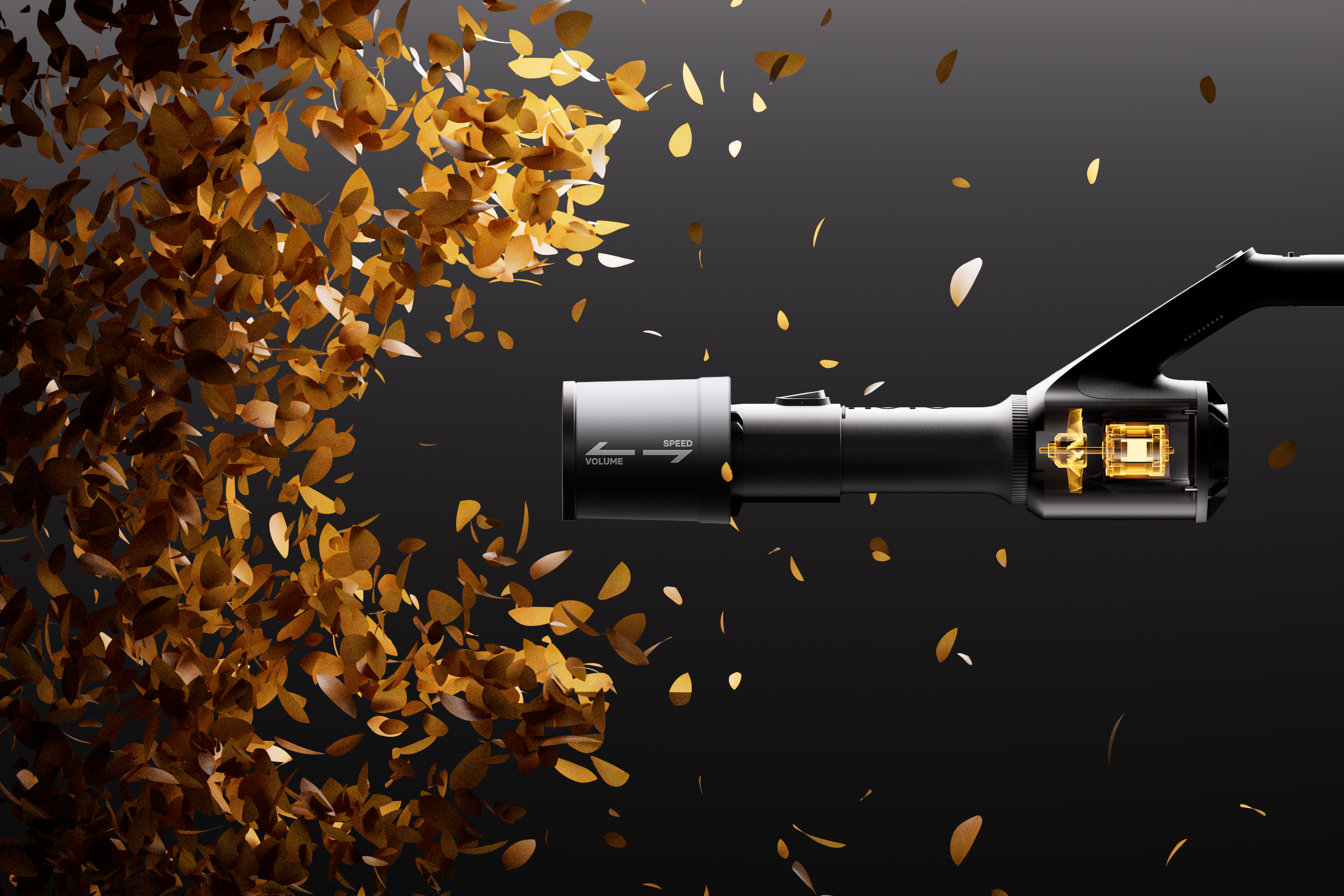
Most people think of a leaf blower simply as a machine that moves air. But for us, the challenge was to rethink it as a design that shapes air. The flow of air itself became the central focus of the design.

From the outset, we knew the inside of the blower was just as important as the outside. The airflow path was refined time and again. Each curve, each diameter adjustment, was carefully tested to ensure that the air didn’t just move in a straight line, but rather in a steady, controlled way.
Once we reached 720 CFM, we realized the number didn’t matter as much as how the air felt. When the air moves with confidence, steady but never too harsh, it felt different — more natural.
The blower wasn’t just pushing air — it was shaping it. And that shift in thinking made all the difference in how we approached the design.
Quiet Power
One of the most important decisions we made was how the blower would sound. When you pull the trigger, it’s not a sudden roar. Instead, there’s a soft hum, followed by the gentle rush of air that fills the space.
We didn’t want the blower to feel like starting an engine. The sound had to be calm and controlled, creating a moment of quiet power rather than a jarring interruption. It needed to feel like a natural extension of your actions, like guiding the wind rather than operating a machine.

Tuning the sound was just as critical as refining the airflow. Along with the sound, we balanced the vibration and gave the blower a three-speed control to match the rhythm of real work. This wasn’t just about making the blower quieter; it was about making the experience smoother, more intuitive, and more human.
When it finally clicked, it wasn’t just about the tool doing its job. It was about how the tool made you feel in the process — steady, controlled, and present.
When It Finally Feels Right
Looking back, the design process revealed a valuable lesson about strength: real power doesn’t have to be loud, heavy, or disruptive. Often, the most effective designs are those that manage restraint — where the strength of the tool lies in its ability to work quietly, without demanding attention.
At just 1.3 kilograms, the final version of the blower feels perfectly balanced. It’s light enough to use for extended periods, but still powerful enough to get the job done. And when you hold it, it doesn’t ask for recognition. It just works, quietly and efficiently.

We call it Shaping the Wind, not just because of its ability to move air, but because of what it made us do — slow down, observe, and appreciate the quiet precision of good design.

Designing the Leaf Blower reminded us that good design doesn’t always shout. Sometimes, it just lets you breathe a little easier.
“We wanted it to feel less like operating a machine, and more like guiding the wind.”
— HOTO Design Team

Designed by HOTO Team