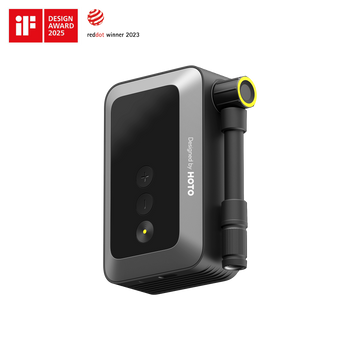




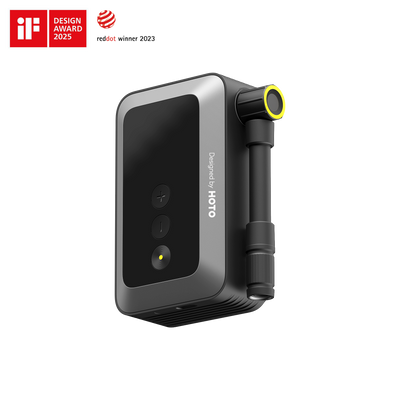




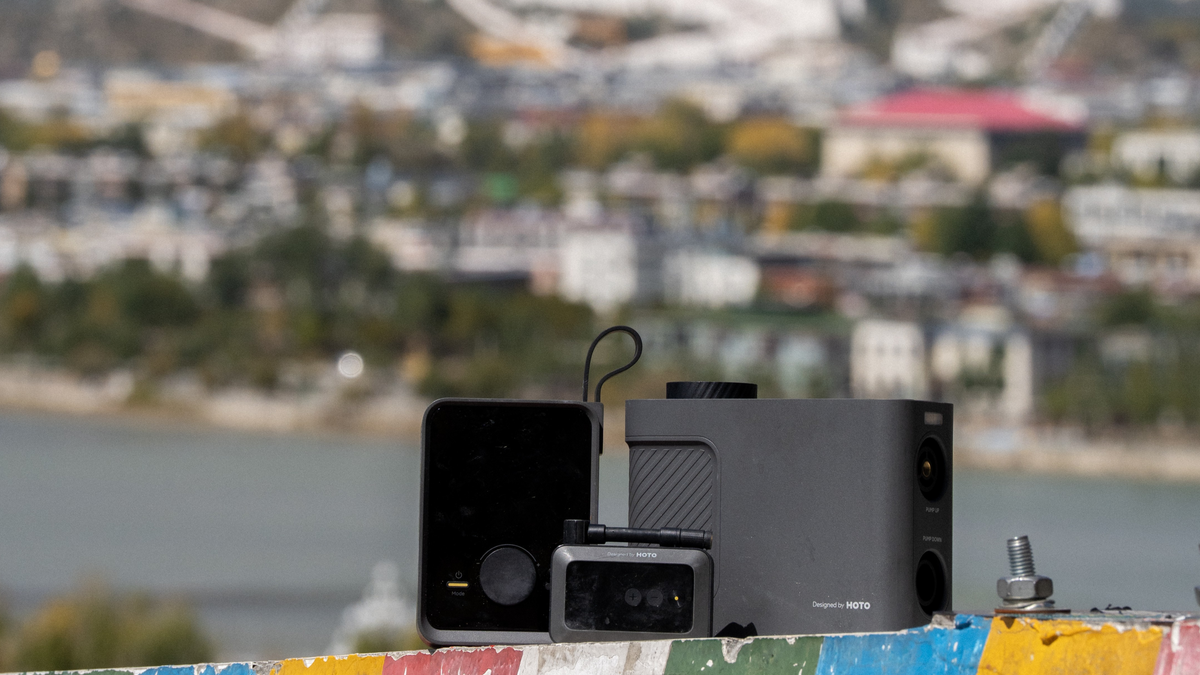
At 4,050 meters above sea level on the Tibetan Plateau, HOTO’s portable air pump was connected to a car tire, with the target pressure set to 2.7 bar. The pump started and continued inflating without interruption until the tire reached the preset pressure. It was a successful field test, but the story behind this result began with a user comment, long before the team made the journey to Tibet.

When Everyday Needs Raise a Question
For most people, using a portable air pump is straightforward: set your target pressure, start inflating, and let the pump do the rest. Yet at high altitudes, changes in atmospheric conditions can make pressure measurement and calibration more challenging.
While reviewing user feedback on this type of product, HOTO's quality team came across a comment from a user in Tibet whose air pump had stopped midway through inflating a car tire, unable to reach the preset pressure. For people living on the Tibetan Plateau, high altitude is not an unusual testing condition. It is part of everyday life.
As a brand focused on making everyday tools better, HOTO wanted the air pump to work as expected not only at sea level, but also at much higher elevations. This feedback raised an important question: if users set a target pressure, can HOTO's air pumps reliably reach it under different conditions?

The Work Behind the Details
With that goal in mind, HOTO’s R&D and quality teams began refining the pump’s pressure calibration logic and software compensation algorithms. But getting the details right proved more complicated than expected. Pressure measurement, airflow, voltage, and current can all affect performance, and adjusting one parameter may influence another.
Different inflation scenarios bring additional challenges: car tires and sports balls operate across different pressure ranges, with small inflatables requiring particularly fine adjustments. The team had to test and fine-tune the settings repeatedly, evaluating performance across different applications rather than focusing on a single result. Engineers spent more than a week refining the settings for small inflatables, with hundreds of rounds of testing and adjustments along the way. Overall, the development and testing process took two to three times as long as that of many routine product functions.
Beyond the Lab, Back to the User
Laboratory testing helped refine the pump’s calibration, but real-world testing was still needed to evaluate its performance under the conditions that had prompted the work in the first place. So the team traveled to Tibet to put our adjustments to the test at an altitude above 4,000 meters. With the target pressure set to 2.7 bar, the pump continued running until the tire reached the preset pressure.
This result was about more than completing a high-altitude test. It was a way to verify that the work done could translate into reliable performance beyond the lab, in a real-world scenario inspired by a user’s experience.

Not every user will need to inflate a tire at more than 4,000 meters above sea level. But for HOTO, a problem does not become less important simply because fewer people encounter it. Users do not need to understand the complexities of pressure calibration or software compensation. They simply expect their tools to work as intended.
It’s this attention to the details that helps HOTO keep making its tools more thoughtful, reliable, and useful in everyday life.

Author: HOTO Branding Team